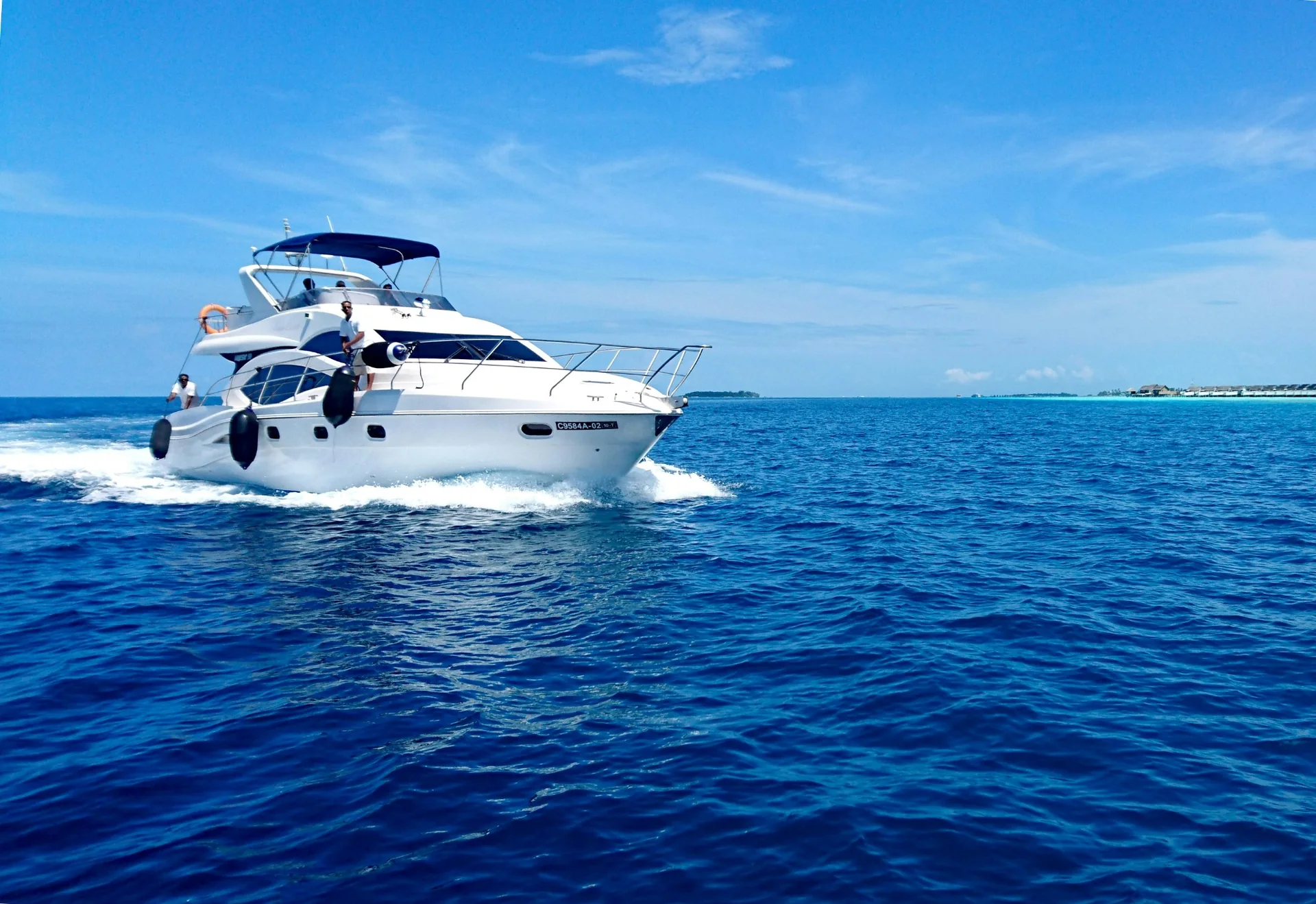
Book a boat trip in Cascais at random and you risk landing on the windiest afternoon of the month. It is rarely a question of sunshine: it can be a glorious day on land and, at the same time, an uncomfortable sea offshore. They are different things.
The right question is not simply «which is the best month», but «which combination of month and time of day gives me the calmest sea». This article answers both, based on how the Cascais coast actually behaves through the year.
In this article you will find:
- The best time of year for a boat trip in Cascais
- Why afternoons are usually windier than mornings in summer
- What to expect month by month, and what each period offers
- How cold the water really is, and whether swimming is realistic
- How to avoid seasickness and prepare for the day
The short answer
May to October offers the most navigable days in Cascais. But the factor that matters most for comfort is not the month — it is the time of day. Between May and September the northerly wind strengthens through the afternoon, which means mornings tend to be calmer. September and early October combine a steadier sea, the warmest water of the year and fewer boats around.
If you want a single recommendation: a September morning on a weekday is, in all likelihood, the most comfortable outing of the year.
How the sea behaves in Cascais through the year
Cascais has a geographical advantage that becomes obvious as soon as you leave the marina: the bay is relatively sheltered. It faces south, protected from the prevailing northerlies by the coastline itself. As a result, on days when the Guincho and Cabo Raso area is unworkable, Cascais Bay can remain perfectly comfortable.
This explains something that puzzles many visitors: you may see photographs of enormous waves at Guincho and, at the same hour, an almost flat sea in front of the marina. A few kilometres apart, two different worlds. The closer a route runs westward towards Cabo Raso, the more exposed it becomes.
In practice the year divides into two regimes. From October to April the Atlantic is dominated by passing depressions, bringing swell and rain — but also leaving windows of calm, luminous days. From May to September the weather settles, but another factor takes over.
The nortada: the factor almost nobody explains
The nortada is the northerly or north-westerly wind that blows along the Portuguese west coast. It is most common in the warmer months, broadly between May and September, and reaches its greatest strength during the afternoon.
Why it blows harder in the afternoon
The mechanism is easy to grasp. In summer the Azores High settles to the west of the Portuguese coast. At the same time the interior of the Iberian Peninsula heats up far faster than the ocean. That thermal contrast drives air movement — and the imbalance is greatest in the late morning and afternoon, once the land has built up enough heat.
The practical outcome: a July day can begin with a mirror-flat sea at ten in the morning and present short, choppy swell with a fresh breeze by four in the afternoon. The sky stayed blue throughout.
What that means on board
The nortada rarely prevents a departure. What changes is comfort. With wind comes short, tightly packed swell, which makes for a livelier passage and a less pleasant one for anyone prone to seasickness. It also makes it harder to anchor comfortably for a swim — and that is usually what disappoints guests who were counting on getting in the water.
This is precisely why we offer a reduced rate on two-hour trips on weekdays between 10:00 and 13:00. It is not simply a cheaper slot: in summer, it is frequently the most comfortable one of the day.
Morning or late afternoon? Choosing the hour
The two best windows of the day serve different purposes, and the choice depends on what you are after.
The morning is the right call if the aim is calm water, swimming and comfort — particularly with children, older guests or anyone inclined to seasickness. It is also the best time to anchor in a cove with settled water.
The late afternoon is the right call if the aim is atmosphere. Low light across the coastline has no substitute, and it is the natural setting for a marriage proposal or a celebration. The wind usually eases after sunset, but until then the sea will be livelier than in the morning. It is a conscious trade: less comfort, more beauty. If that is the priority, see the private sunset in Cascais.
Month by month: what to expect
| Period | Sea and wind | Best for |
|---|---|---|
| November to February | Fewer navigable days; frequent Atlantic swell, but with windows of calm sea | Short outings and discreet ceremonies; anyone with flexible dates |
| March and April | Transitional; unsettled weather but with very good days and an improving sea | Those after low-season rates who are not counting on swimming |
| May | Good conditions; the nortada begins to make itself felt in the afternoon | Morning trips; a coastline still free of crowds |
| June | Long, settled days; afternoons already windy | One of the best windows of the year, especially in the morning |
| July and August | Peak heat and peak demand; stronger afternoon nortada; colder water through upwelling | Mornings; celebrations and groups who value atmosphere |
| September | The nortada eases; water at its warmest; fewer boats about | Overall, the best month for comfort |
| October | The first half is often excellent; autumn light is particularly beautiful | Sunsets and unhurried trips, with an earlier departure time |
Water temperature and swimming
This deserves saying plainly, because it is one of the biggest surprises on board: the water on the west coast is cold, even at the height of summer. Along much of the western coastline it frequently stays between 17 °C and 20 °C even in August.
The cause is the nortada itself. The northerly wind pushes warmer surface water offshore and allows colder water from deeper layers to rise near the coast — a process known as upwelling. That is why days of strong nortada tend to bring colder water, and why spells without wind allow it to rise. During recent episodes of hot weather and light winds, the Portuguese weather service recorded figures of around 22 °C to 23 °C along the mainland coast.
Translated into the day itself: swimming is entirely feasible, and plenty of guests do. But do not expect Mediterranean water. September is usually the most pleasant month for getting in, because the ocean has been accumulating heat all summer.
Common mistakes when booking
- Choosing the time by your diary rather than by the sea. Booking 15:00 on an August day because it was the free slot is the easiest way to catch the daily peak of wind.
- Assuming sunshine means a calm sea. They are independent variables. Days with the strongest nortada tend to be precisely the clear ones.
- Counting on swimming with no margin. If getting in the water is essential, choose a morning and keep an alternative date in hand.
- Leaving the booking to the day itself in August. It is the month of highest demand and the best windows go first.
- Writing off the low season. October and May frequently deliver better days than their reputation suggests, with the marina practically to yourself.
How to prepare and avoid seasickness
If you are prone to seasickness, these measures resolve most cases:
- Choose the morning. By some distance the decision with the greatest effect.
- Eat something light beforehand. Going out on an empty stomach makes it worse; so do heavy meals.
- Stay outside and watch the horizon. Discomfort worsens in enclosed spaces and when looking down — phones included.
- Position yourself amidships. It is the area of least movement.
- If you take seasickness medication, take it before boarding. These medicines need time to work and should be taken according to the guidance of a pharmacist or doctor.
- Bring a windproof jacket. Even in August, the apparent wind under way is noticeably cool.
What if the weather turns?
This is the question that usually holds up a booking, and the answer is straightforward. When sea conditions do not allow a safe and comfortable departure, we look to reschedule for a date that suits you. If no alternative can be found, the deposit is returned.
We would rather reschedule than press on. A trip taken on a bad day is not what anyone wants to remember — and the decision on conditions is always ours, taken with the forecast in front of us rather than on the quay at departure time.
Conclusion
The best time for a boat trip in Cascais is between May and October, with September leading the way. But if there is one thing to take from this article, let it be this: in summer, choose the morning. It is the difference between sailing on a settled sea and sailing into the afternoon nortada — on the same day, under the same sun, for the same price.
After that, it comes down to what you are looking for: comfort and swimming, or the light of late afternoon. Both answers are right.
Frequently Asked Questions
Private trips departing from Cascais Marina
Paiva & Branco Rental Boats runs private boat trips in Cascais, departing from Cascais Marina, Pontoon M, with crew included. Every outing is reserved exclusively — no other passengers on board — and the route is adjusted to the duration chosen and to sea conditions on the day.
Availability is seasonal and should be confirmed. Tell us the date and what you would like to do on board, and we will help you choose a suitable time for the forecast conditions.
See boat rental in CascaisRelated articles

Scattering Ashes at Sea in Portugal: What the Law Says
The legal position explained with the specific articles, the authorisations involved and what to consider for a ceremony on board.
Read articleSources consulted
- IPMA — Portuguese Institute for Sea and Atmosphere: wind regime on the west coast, upwelling and sea water temperature
- Meteorological characterisation of the nortada on the Portuguese west coast (specialist meteorological publications)
- Official IPMA information on wind, sea conditions and water temperature
Descriptions of typical conditions are indicative and refer to average patterns. The decision on each departure is always based on the specific forecast for the day.